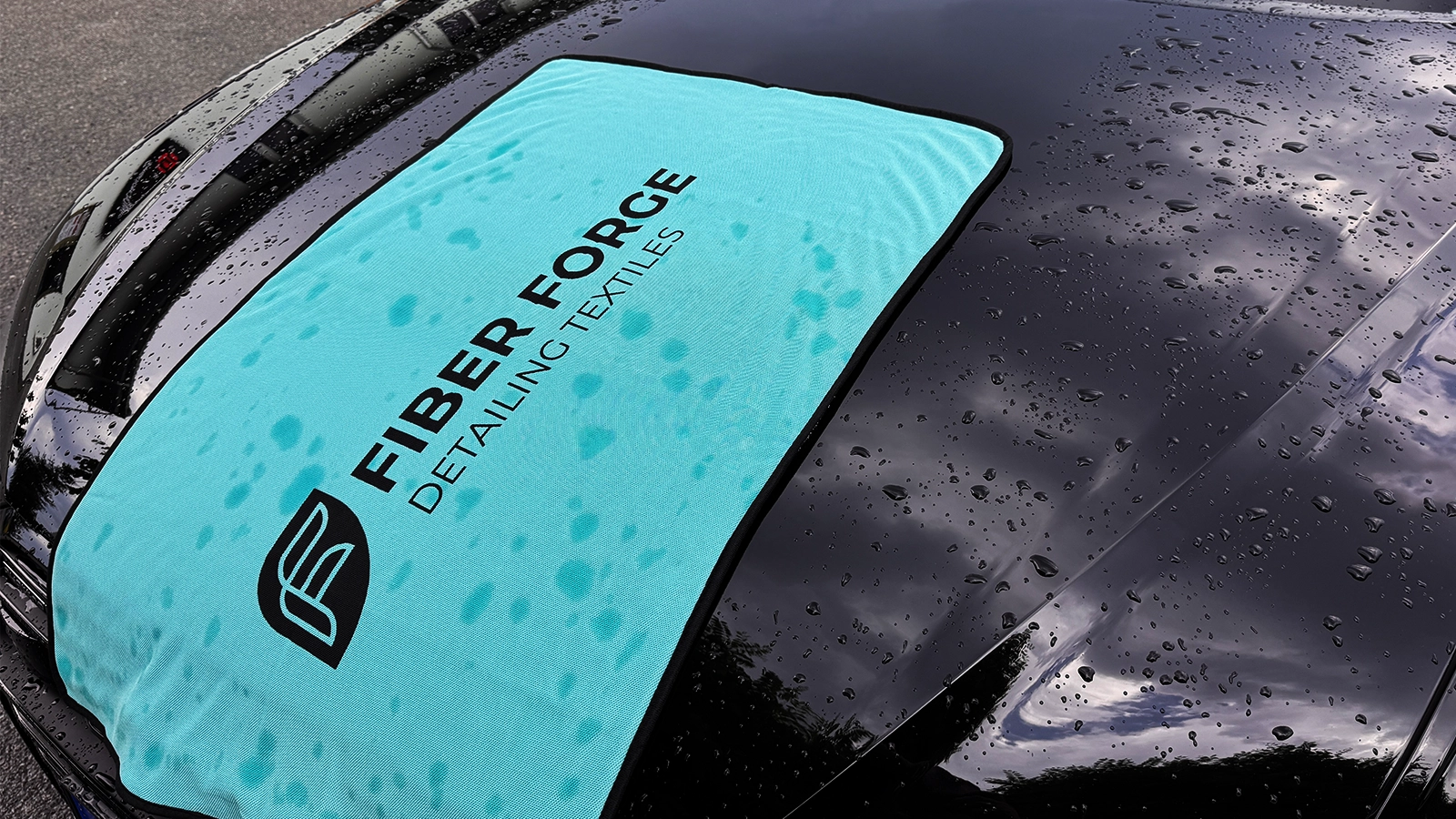
# How to Dry Your Car After Washing – The Complete Guide to Safe, Streak-Free Car Drying
Washing your car thoroughly is only half the job. Even perfectly clean paintwork can lose its flawless appearance if water spots, streaks, and mineral deposits are left behind. That's why **drying your car properly after washing** is one of the most important stages of automotive detailing, whether you're a weekend enthusiast or a professional detailer.
But what is the best way to dry a car? Which microfiber drying towel should you choose? Is it possible to dry your car without rubbing the paint? And how can you prevent fine scratches, swirl marks, and stubborn water spots?
In this comprehensive guide, **FiberForge** explains step by step how to dry your vehicle safely, which techniques deliver the best results, and why choosing the right **car drying towel** makes such a difference to the final finish.
## Why Is Drying Your Car After Washing So Important?
Many car owners finish their washing routine after rinsing away the shampoo, assuming the remaining water will simply evaporate.
Unfortunately, allowing a vehicle to air-dry can leave visible marks on its paintwork.
Tap water contains dissolved minerals, including calcium and magnesium compounds. As water droplets evaporate, some of these minerals remain on the surface, creating deposits commonly known as *water spots*.
These marks are particularly noticeable on dark paintwork, glass, and glossy trim. Depending on the water composition and environmental conditions, some deposits can become increasingly difficult to remove.
Properly drying your car after washing helps to:
- Reduce water spots and mineral deposits.
- Minimize the risk of micro-scratches caused by improper drying techniques.
- Achieve a clean, streak-free finish on paintwork and glass.
- Prevent trapped water from dripping out of mirrors, badges, and body panels.
- Prepare the paint surface for the application of suitable detailing products.
**Safe car drying is not about aggressively wiping water away.** The goal is to absorb moisture efficiently while minimizing friction against the paint.
## What Is the Best Way to Dry a Car? Microfiber Towels vs. Air Blowers
Several methods can be used to dry a vehicle, but a purpose-designed **microfiber car drying towel** remains one of the most practical solutions for everyday car care.
Unlike ordinary household towels, high-quality detailing microfiber features a specialized structure designed to collect and retain water.
A good car drying towel should be soft, absorbent, and easy to handle across the vehicle's paintwork.
### Twisted Loop Microfiber Drying Towels
One of the most popular options in professional automotive detailing is the **Twisted Loop microfiber drying towel**.
This type of towel features a distinctive structure of twisted microfiber loops designed for efficient water absorption.
Its main advantages include excellent water collection, a large working surface, and the ability to dry sizeable body panels without aggressive rubbing.
An example is the **FiberForge Ultra Dry XL 1200 GSM**, a large car drying towel measuring 70 × 90 cm.
### Using a Car Drying Blower
A specialist car drying blower can be used as an alternative or complement to microfiber towels.
It helps remove trapped water from hard-to-reach areas such as side mirrors, front grilles, number plate surrounds, and body panel gaps.
A purpose-built detailing blower with appropriately filtered air can reduce the need for direct contact with the paint surface.
However, a blower is not essential for achieving a professional-looking finish.
In many situations, a high-quality microfiber drying towel combined with proper technique is all you need.
## How to Dry Your Car Properly – Step-by-Step Guide
Effective car drying does not require complicated procedures. The most important factors are preparing the surface correctly, following the right drying sequence, and using a gentle microfiber technique.
### Step 1. Wash and Rinse the Vehicle Thoroughly
Before you start drying, make sure the paintwork is free from dirt, sand, and shampoo residue.
This is one of the fundamental rules of safe car care.
Even the best microfiber drying towel cannot eliminate the risk of scratches if abrasive particles remain between the towel and the paint.
For safe hand washing, you can use a soft detailing wash mitt such as the **FiberForge Wash Mitt**.
Once the washing stage is complete, rinse every section of the vehicle thoroughly.
### Step 2. Remove Excess Water Before Using a Drying Towel
You do not necessarily need to absorb every drop of water with a microfiber towel.
An effective technique is known as the *sheeting method*.
This involves directing a gentle, continuous stream of water across the vehicle's surface.
On suitably hydrophobic paintwork, water can collect into larger streams and flow off the panels, leaving fewer individual droplets behind.
As a result, your car drying towel has less water to absorb.
💡 **TIP:** The sheeting method works particularly well on paintwork protected with wax, a paint sealant, or a ceramic coating. However, its effectiveness depends on the water-repellent properties of the surface.
### Step 3. Start Drying from the Roof
When drying a car, it is best to work from top to bottom.
Start with the roof before moving to the windows, bonnet or hood, boot lid or trunk, and upper door panels. Finish with the lower sections of the bodywork.
Following this sequence helps prevent water from higher areas running onto panels you have already dried.
For large body panels, a microfiber drying towel with a generous working surface is particularly convenient.
The **FiberForge Ultra Dry XL 70 × 90 cm** makes it easier to dry large areas such as SUV roofs, bonnets, and tailgates.
### Step 4. Use the Gentle Towel-Dragging Method
One of the most practical techniques for drying a vehicle is gently dragging the drying towel across the wet surface.
Lay a clean microfiber towel flat on the paint and slowly pull it towards you.
Avoid applying excessive pressure. Let the towel's construction and absorbency do most of the work.
Use controlled, straight movements and avoid repeatedly rubbing the same area.
The less unnecessary friction you create on a clean paint surface, the lower the risk of causing unwanted micro-scratches.
### Step 5. Use the Pat-Drying Method on Delicate Surfaces
Not every part of your vehicle needs to be dried by dragging a towel across the surface.
An alternative is the *pat-drying* or *blotting* method.
This technique involves gently placing the microfiber towel onto the wet paint, allowing it to absorb the water, and lifting it away.
By avoiding long movements across the paintwork, you can collect moisture with minimal friction.
Pat drying is especially useful on delicate surfaces and vehicles where reducing direct contact is a priority.
💡 **TIP:** Wondering how to dry a black car without introducing swirl marks? No drying towel can guarantee completely scratch-free results. The most important factors are clean paintwork, a clean microfiber towel, and a gentle drying technique.
### Step 6. Regularly Change the Working Area of Your Towel
Even a highly absorbent microfiber towel has a limited water-holding capacity.
As the fibers become saturated, their drying efficiency can decrease. Instead of absorbing moisture, an overly wet towel may begin spreading water across the paintwork.
Regularly switch to a drier section of the towel.
For larger vehicles or more demanding detailing sessions, keeping a second clean microfiber drying towel ready is a practical solution.
### Step 7. Dry Mirrors, Seals, and Hard-to-Reach Areas
Have you ever noticed water streaks reappearing on your doors after carefully drying your car?
The cause is often residual water trapped inside body panel gaps and small recesses.
Pay particular attention to side mirror housings, door handles, emblems, rubber seals, and number plate surrounds.
A smaller microfiber cloth can be useful for these areas.
The **FiberForge Edge Less 40 × 40 cm, 330 GSM** is a practical companion to a larger car drying towel, especially for targeted drying and finishing tasks.
However, remember to use separate microfiber cloths for clean paintwork, door jambs, and more heavily contaminated areas.
### Step 8. Check the Windows and Remove Remaining Streaks
Glass surfaces require special attention because even small amounts of residual water can leave noticeable streaks.
After drying the bodywork, check the windscreen or windshield, side windows, rear window, and mirrors.
If you notice any streaks, finish the surface with a clean microfiber cloth suitable for glass cleaning.
Avoid using an excessively wet towel, as it may spread moisture instead of absorbing it.
### Step 9. Inspect the Vehicle After Drying
The final step is a careful inspection of the entire vehicle under suitable lighting.
Look for remaining droplets, streaks, or areas where trapped water is still escaping.
Open the doors and boot or trunk if necessary, and inspect the door jambs, seals, and lower body edges.
Once these areas have been checked, the car washing and drying process is complete.
## Which Car Drying Towel Should You Choose? Discover FiberForge Ultra Dry
The right technique is essential, but choosing suitable detailing accessories is equally important.
**FiberForge** develops microfiber towels and car care accessories designed for different stages of vehicle maintenance.
For drying paintwork, two models are particularly worth considering, with different dimensions and fabric weights.
### FiberForge Ultra Dry XL – 70 × 90 cm, 1200 GSM
The **FiberForge Ultra Dry XL** is a large microfiber car drying towel designed to collect water efficiently from extensive painted surfaces.
Its Twisted Loop microfiber structure, 1200 GSM fabric weight, and edgeless construction without traditional stitched edging make it a practical option for comfortable car drying.
The generous size is especially useful for owners of SUVs, estate cars, and vehicles with large body panels.
It can also be a valuable addition to a professional car detailing studio.
### FiberForge Ultra Dry – 60 × 90 cm, 800 GSM
The **FiberForge Ultra Dry 800 GSM** is an alternative for those looking for a large, absorbent drying towel while preferring a slightly lighter material.
Its 60 × 90 cm dimensions provide a generous working area, while the 800 GSM fabric weight offers a practical balance between absorbency and ease of use.
It is suitable for regular hand washing routines and as an additional drying towel during more comprehensive detailing sessions.
### Is a 1200 GSM Drying Towel Better Than an 800 GSM Towel?
GSM stands for *grams per square meter* and refers to the weight of fabric per unit of area.
A higher GSM value means a greater amount of material per square meter, but it is not the only factor determining water absorption.
The fiber type, fabric structure, towel dimensions, and construction quality also influence performance.
Choosing between 800 GSM and 1200 GSM should therefore depend on your vehicle size, intended use, and personal preferences.
The **Ultra Dry XL 1200 GSM** is a suitable choice if you prefer a large, heavier drying towel. The **Ultra Dry 800 GSM** offers a balance of size, absorbency, and comfortable handling.
## Common Mistakes to Avoid When Drying Your Car
Even a premium microfiber towel may fail to deliver the expected results if used incorrectly.
### Drying a Car in Direct Sunlight
Hot paintwork accelerates water evaporation, meaning water spots may appear before you have finished drying the vehicle.
Whenever possible, wash and dry your car in the shade or in a suitable indoor space.
### Using an Ordinary Household Towel
Bath towels are not specifically designed for automotive paintwork.
Their texture or construction may be unsuitable for delicate painted surfaces, and they may leave lint behind.
For car drying, choose microfiber towels designed for automotive detailing.
### Applying Too Much Pressure
Heavy pressure is generally unnecessary when using an absorbent microfiber drying towel.
If contaminants are still present on the surface, pressing too hard can increase the risk of scratches.
### Using a Dirty Microfiber Towel
A microfiber towel that has fallen onto the ground may collect sand, grit, and other abrasive particles.
Do not use it on the paint again until it has been thoroughly cleaned.
### Allowing the Car to Air-Dry
Depending on water hardness and environmental conditions, letting water evaporate naturally may lead to mineral deposits.
Even vehicles protected with ceramic coatings can benefit from proper drying after washing.
## How to Wash Microfiber Drying Towels and Maintain Their Absorbency
Proper microfiber care is essential for maintaining the performance and longevity of your car drying towels.
FiberForge detailing towels should be washed according to their individual care instructions, typically at **30–40°C**.
A dedicated microfiber detergent is recommended, and fabric softeners should be avoided.
Fabric softeners can leave residues on the fibers, reducing their ability to absorb water effectively.
Avoid washing paint drying towels together with heavily soiled workshop cloths or textiles that release lint.
After washing, dry the microfiber according to the manufacturer's recommendations and avoid excessive heat.
💡 **TIP:** Store clean microfiber drying towels in a closed container or cupboard. This helps protect the fibers from dust and contamination before the next use.
## Do You Still Need to Dry a Ceramic-Coated Car?
Yes. Ceramic coatings can make vehicle maintenance easier thanks to their water-repellent properties, but they do not guarantee that every drop of water will disappear from the paint.
Highly hydrophobic surfaces often cause water to form distinctive beads.
If these droplets remain on hot paint and evaporate, mineral deposits can still develop.
For this reason, vehicles protected with ceramic coatings, waxes, or paint sealants should also be dried after washing.
Use a clean, soft microfiber towel suitable for the surface and avoid unnecessary pressure.
## Drying Your Car in Winter – What Should You Consider?
During winter, proper car drying becomes even more important.
Water trapped inside rubber seals, locks, and body panel gaps can freeze, potentially making doors or the boot difficult to open.
After washing a vehicle in cold weather, pay particular attention to door seals, handles, side mirrors, and door jambs.
When temperatures are close to or below freezing, washing and drying the vehicle in a heated indoor environment is preferable whenever possible.
## FAQ – Frequently Asked Questions About Car Drying
### What is the best thing to dry a car with after washing?
A large, absorbent microfiber drying towel designed for automotive detailing is one of the most practical options. Examples include the FiberForge Ultra Dry and Ultra Dry XL car drying towels.
### How can I dry my car without scratching the paint?
Wash and rinse the vehicle thoroughly, use only clean microfiber towels, and avoid applying excessive pressure. Gentle towel dragging and pat drying can help minimize unnecessary friction.
### Are Twisted Loop towels good for drying cars?
Yes. Twisted Loop microfiber towels are designed for efficient water collection and are widely used in automotive detailing.
### How many drying towels do I need for one car?
This depends on the vehicle size, the amount of remaining water, and the towel's absorbency. A large drying towel may be sufficient for much of the vehicle, although a second towel can be useful for larger cars and final finishing.
### Can I dry my car using only an air blower?
Yes, provided the blower is suitable for automotive detailing and can remove the remaining water effectively. Many detailers find that combining a blower with a microfiber drying towel is convenient.
### Can I use a quick detailer while drying my car?
Certain quick detailers and drying aids can be applied to damp paintwork to support the drying process. Always follow the specific product's instructions.
### How do I prevent water spots after washing my car?
Dry your vehicle promptly after rinsing, work on cool paintwork, and use a clean, absorbent microfiber towel. If you have hard tap water, a final rinse with demineralized water may also help.
## Conclusion – Proper Car Drying Is Essential for Professional Detailing
Drying your car correctly after washing is just as important as removing dirt during the washing process.
It helps reduce water spots and mineral deposits, while careful technique can minimize unnecessary friction and the risk of micro-scratches.
The most important factors are clean paintwork, a suitable microfiber drying towel, the correct working sequence, and gentle water removal.
It is also worth remembering that not all microfiber products are designed for the same purpose.
Large car drying towels are ideal for collecting water from extensive painted panels, while smaller detailing cloths are useful for finishing and working in hard-to-reach areas.
**FiberForge Ultra Dry XL 1200 GSM, Ultra Dry 800 GSM, and Edge Less 330 GSM** form a practical combination for car care enthusiasts and professional automotive detailers alike.
**Discover FiberForge detailing accessories and take care of every stage of your vehicle maintenance routine – from thorough washing and safe drying to a flawless paint finish.**
FIBERFORGE JOURNAL ✳ Uncategorized
Jak prawidłowo osuszać samochód?
# How to Dry Your Car After Washing – The Complete Guide to Safe, Streak-Free Car Drying Washing your car thoroughly is only half the job. Even perfectly clean paintwork can lose its flawless appearance if water spots,…